welcome

الجمعة، 10 يونيو 2011

Exiles leave it late

Exiles leave it late

Hosts come up just short after thrilling finish
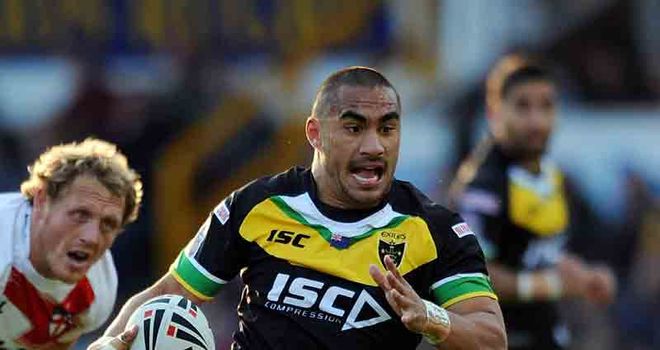


George Carmont scored a last-minute try to deny England victory over the Exiles in the inaugural International Origin match at Headingley.
The Wigan centre's score earned the scratch side a 16-12 victory in a game which England will regard as a useful warm-up ahead of the Four Nations in the autumn.
Steve McNamara's side performed creditably and will feel they should have won after leading 12-10 with just seconds remaining, although the Exiles probably had just about the better of an evenly-fought contest.
The game came close to the intensity of the Test matches England can expect against the Kiwis and Kangaroos in November - the desperately slow play-the-balls that referee Richard Silverwood allowed were certainly painfully reminiscent of so much Test match rugby.
That suited the Exiles but it is something England will have to live with.
Both sides defended solidly throughout and there was no doubting the intensity of the tackling.

Space

The Exiles grabbed an early lead after Jamie Peacock's poor offload gifted them good field position and Thomas Leuluai's step created the space for Willie Manu to crash over, with Pat Richards adding the extras for a 6-0 lead.
England struggled to create a great deal and seemed happy to hammer away with one-out forward runs and the Exiles looked the more dangerous, with Sam Tomkins forced into a try-saving tackle on the outstanding Rangi Chase.
England's try when it arrived on 20 minutes came almost out of nowhere, with James Graham busting through the middle and slipping the ball out for Richie Myler to race in and score under the posts, with Kevin Sinfield converting.
But Brett Hodgson's chip and Sia Soliola's flick back infield to Francis Meli gave the Exiles the lead at the break and Sam Tomkins had to come up with another try-saving tackle, this time on Richards, on the hooter.

War of attrition

The second half developed into a war of attrition with chances at a premium, although Jon Wilkin's break almost set up a try only for his pass to go to ground, before Carmont was held up by four defenders over the line.
The deadlock was broken 12 minutes from time when Joel Tomkins showed superb timing and then raw pace to break off his own line, intercept Danny Buderus' pass and race 80 metres to score. Sinfield kicked the goal and England led for the first time.
They looked set to stay ahead after surviving two sustained assaults on their own line, but inside the final minute the Exiles kept the ball alive one last time and Carmont was able to cut inside and wrong-foot three tiring defenders to score the match-winner.

THINGS DON'T DO IT WHEN YOU EAT

THINGS DON'T DO IT WHEN YOU EAT

سبعة أشياء يجب أن لاتمارسها بعد الأكل


لا تشرب الشاي - لأن أوراق الشاي تحتوي على نسبة عالية من الحمض. وهذه المادة ستأثر على البروتين المتواجد في الأطعمة التي نستهلكها وتجعلها جافة وعسيرة الهضم.


· Don't drink tea - Because tea leaves contain a high content of acid. This substance will cause the Protein content in the food we consume to be hardened thus difficult to digest.


--------------------------------------------------------------------------------


لا تأكل الفواكه بعد الأكل مباشرة - إن أكل الفواكه مباشرة بعد الأكل يتسبب في إنتـفاخ البطن بالهواء. لذى يجب الحذر أخذ الحيطة في عدم تناول الفواكه قبل مضي ساعة إلى ساعتين من الأكل أو قبل ساعة من الوجبة الغذائية.


· Don't eat fruits immediately - Immediately eating fruits after meals will cause stomach to be bloated with air. Therefore take fruit 1-2 hr after meal or 1hr before meal.


--------------------------------------------------------------------------------


لا ترخي حزام السروال - لاترخي حزام (مشد) السروال بعد الأكل لأن ذلك يتسبب في إلتواء الأمعاء وتسكيرها.


· Don't loosen your belt - Loosening the belt after a meal will easily cause the intestine to be twisted & blocked.


--------------------------------------------------------------------------------


لا تسبح بعد الأكل – إن السباحة بعد الأكل يسبب أرتفاع تدفق الدم لليدين, الأرجل وبالتالي سيقلل تدفق الدم في مناطق كثيرة من الجسم وبا لأخص حول منطقة البطن وعليه سيضعف ذلك الجهاز الهضمي.


· Don't bathe - Bathing will cause the increase of blood flow to the hands, legs & body thus the amount of blood around the stomach will therefore decrease. This will weaken the digestive system in our stomach.


--------------------------------------------------------------------------------


لا تمشي – الكثير من الناس يعتقدون بجدوى المشي بعد الأكل مائة خطوة ستجعلك تعمر تسعة وتسعين عام. في الحقيقة أن هذا غير صحيح. لأن المشي سيعطل الجهاز الهضمي من إستخلاص الغذاء من الأطعمة التي أكلناها في التو.


· Don't walk about - People always say that after a meal walk a hundred steps and you will live till 99. In actual fact this is not true. Walking will cause the digestive system to be unable to absorb the nutrition from the food we intake.


--------------------------------------------------------------------------------


لا تنم في الحال – إن النوم بعد الأكل مباشرة يتسبب (يعطل) إكمال عملية هضم الطعام بشكل جيد. بالنتيجة سيقيدنا ذلك إلى عدوى معوية أو إلتهاب معوي.


· Don't sleep immediately - The food we intake will not be able to digest properly. Thus will lead to gastric & infection in our intestine.


--------------------------------------------------------------------------------


لا تدخن – تجربة من خبير تدخين(مدخن) سابق, تدخين سجارة واحدة بعد الأكل تعادل تدخين عشر سجائر في الأوقات الأخرى ( لذلك نسبة الإصابة بالسرطان أكثر في حالة التدخين بعد الأكل مباشرة).


* Don't smoke- Experiment from experts proves that smoking a cigarette after meal is comparable to smoking 10 cigarettes (chances of cancer is higher).

Amana-Style Swiss Steak


You'll Need:

1 1/2 pounds lean beef steak
1 1/2 tablespoons shortening
1/4 cup all-purpose flour
3/4 teaspoon salt
Pepper to taste
1/2 cup vinegar
1 medium onion, chopped

Procedure:
Combine flour, salt and pepper; pound into steak. (Meat may be cut into serving pieces, or not, as desired.) Melt shortening in a large skillet and brown steak light on both sides. Add vinegar and cook just until liquid evaporates. Add chopped onion and cover with water. Cover skillet and simmer until meat is tender (about 2 hours). If necessary, add more water during cooking. Cooking liquid may be thickened with flour before serving, if desired

الخميس، 9 يونيو 2011

Haemostasis

Haemostasis


Haemostasis or normal blood clotting is essential for survival
The normal physiological response that prevents significant blood loss following
vascular injury is called haemostasis.6 Familiarity with haemostasis lays the groundwork for a thorough understanding of the major disease states associated with thrombosis, such as venous thromboembolism (VTE), atherothrombosis (thrombosis triggered by plaque rupture), and cardioembolic stroke.

Blood vessel injury triggers the following sequence:
The vessel constricts to reduce blood flow
Circulating platelets adhere to the vessel wall at the site of trauma
Platelet activation and aggregation, coupled with an intricate series of enzymatic reactions involving coagulation proteins, produces fibrin to form a stable haemostatic plugThis finely tuned process serves to maintain the integrity of the circulatory system.
10 However, the process can go out of balance, leading to significant morbidity and mortality.11
Coagulation schematic
Abnormal haemostasis

Excessive coagulation leads to the formation of a thrombus, potentially obstructing blood flow. This is a common problem, especially in hospitalised or immobilised patients. Venous thromboembolic disease, for example, is a major problem in the European Union, where it causes more than one million events or deaths every year.12Excessive bleeding results when certain coagulation factors are lacking, as in patients with haemophilia.13
The coagulation cascade

Coagulation involves a complex set of protease reactions involving roughly 30 different proteins.14 The final result of these reactions is to convert fibrinogen, a soluble protein, to insoluble strands of fibrin. Together with platelets, the fibrin strands form a stable blood clot.

An evolving model

For decades, the coagulation cascade was conceptualised as having two distinct points of initiation, labelled the extrinsic and intrinsic pathways.15 Over time, however, it has become clear that these pathways do not function in the body as parallel, independent systems. The finding that the tissue factor-factor VIIa complex from the extrinsic pathway activates factors in both systems suggests that they are linked. This discovery, combined with an evolving understanding of the role of different cells, in particular blood platelets, has led to a cell-based model of coagulation. Unlike the older, intrinsic/extrinsic cascade model, the cell-based model includes the important interactions between cells directly involved in haemostasis (ie, tissue factor-bearing cells and platelets) and coagulation factors. This model more accurately represents the interaction between cellular activity and coagulation proteins that leads to blood clot formation.15
The intrinsic and extrinsic pathway model

This model divides the initiation of coagulation into distinct parts: the extrinsic pathway and the intrinsic pathway.6 The extrinsic pathway is the primary initiator of coagulation, while the intrinsic pathway leads to the successive activation of Factors IX and X. Activated Factor X (Factor Xa) plays a central role in the coagulation cascade, as it occupies a point where the intrinsic and extrinsic pathways converge.

The cell-based model

The cell-based model identifies the membranes of tissue factor–bearing cells and platelets as the sites where activation of specific coagulation factors occurs.15 This model posits a three-phase process — initiation, amplification, and thrombin action. Initiation occurs after vascular injury, when tissue factor–bearing cells bind to and activate Factor VII. This leads to production of a small amount of thrombin. Thrombin then activates platelets and cofactors during the amplification phase. The prothrombinase complex (comprising Factor Xa and cofactors bound to activated platelets) is responsible for the burst of thrombin production leading to the third phase of clot formation.

Propagation of clotting: the central role of Factor Xa

Factor Xa plays a central role in the coagulation process in both the older, extrinsic/intrinsic model as well as the more recently proposed cell-based model. The coagulation cascade is triggered when injury to a blood vessel allows blood to come in contact with tissue factor (TF)–bearing cells. Factor Xa, with activated Factor V (Va) as a cofactor, propagates coagulation by converting prothrombin (Factor II) to thrombin (Factor IIa).15 Factor Xa is the primary site of amplification in the process: one molecule of Factor Xa catalyses the formation of approximately 1000 thrombin molecules.16 For this reason, development of medications that inhibit Factor Xa is an active and promising area of pharmaceutical research.17

Final step: fibrin formation

In the final step of the series of protease reactions leading to clot formation, thrombin triggers conversion of the soluble protein fibrinogen to insoluble fibrin strands. Thrombin also activates Factor XIII, which stabilises the clot by cross-linking the fibrin. The resulting fibrin mesh traps and holds cellular components of the clot (platelets and/or red blood cells).6

Fibrinolysis: restoring blood flow

Fibrinolysis, as the term implies, is the process that dissolves fibrin. It leads to clot dissolution. Plasminogen is the precursor of plasmin, which breaks up fibrin clots. During initial clot formation, plasminogen activators are inhibited. Over time, endothelial cells begin to secrete tissue plasminogen activators to start dissolving the clot as the structural integrity of the blood vessel wall is restored. Medications that convert plasminogen to plasmin are used to treat acute, life-threatening thrombotic disorders, such as myocardial infarction.6

Merriam Webster's Medical Audio Dictionary


Merriam-Webster's Audio Dictionary CD-ROM, Version 3.0 (Merriam Webster's Medical Audio Dictionary)By Merriam-Webster


Publisher: CENGAGE Delmar Learning
Publication Date: 2004-12-22
ISBN-10 / ASIN: 0877794731
ISBN-13 / EAN: 9780877794738
Binding: CD-ROM


Product Description

The dictionary program contains the full text of Merriam-Webster's Medical Desk Dictionary, Revised Edition. It contains useful tables and more than 750 illustrations. The dictionary software allows fast dictionary lookups, and also provides browse options and advanced search capabilities that allow you to conduct even sophisticated language research with ease. It contains 8 search options, including entry word lookups, defining text searches (e.g., searches for words within the definitions), searches for word function (e.g., part of speech) and usage notes (e.g., regional, temporal, or stylistic labels), as well as searches of the text of verbal illustrations or biographical sketches. Advanced search functions allow you to combine individual search options to create detailed searches that meet your needs


Amazon.com:

Medical lingo is nearly a language in its own right, so for students of medicine or amateurs who'd like to understand their doctors' conversations, a dictionary of medical terms is a necessity. With a section on medical prefixes and suffixes, more than 2,000 new entries added since 1986, and thousands of illustrations, the recent version is 112 pages longer and a lot easier on the eyes. There's information on AIDS, biochemistry, psychiatry, and geriatric medicine, concise definitions for procedures, tests, and medications, plus all the terms and topics that hit the headlines or appear in your physical report.


Summary: Perfect tool book for foreigner medical guy
Rating: 5


If you don't speak English, and try to start your medical career in a English country. Merriam Webster's Medical Audio Dictionary can help you successful.


Summary: Nice to have and very helpful
Rating: 4
Best in: Quality of sound, sharp pronunciation, complete word coverage, shortcut menu access


XXXXXXXXXXXXXXXXXXXXXXXXXXXXXXXXXXXXXXXXXXXXXXXXXXXXXXXXXXXXXXX


System Requirements


WINDOWS===================================

* Microsoft Windows 98/Me/2000/NT 4.0/XP/Vista/Win7

* Pentium or higher processor

* CD-ROM drive

* SVGA monitor with a screen resolution of 800 x 600 pixels

and using 16-bit color (called High Color in Windows

2000 and Medium Color in XP)

* Keyboard and Windows-compatible pointing device (e.g.,

mouse)

* 32 MB RAM

* 70-100 MB hard drive space (depending upon the reference

purchased

* Sound card and speakers (for audio versions)

* To use Go Online options, Netscape version 4.75 or higher

or Microsoft Internet Explorer version 5.0 or higher


MACINTOSH:
===================================

* Macintosh computer with a G3 or G4 processor or higher

* OS 9.x or 10.x

* SVGA monitor that can display a screen resolution of

at least 800 x 600 pixels and using thousands of colors

* Keyboard and a Macintosh compatible pointing device

(e.g., mouse)

* 32 MB RAM

* 70-100 MB hard drive space (depending upon the reference

purchased

* Sound card and speakers (for audio versions)

* To use Go Online options, Netscape version 4.75 or higher

or Microsoft Internet Explorer version 5.0 or higher


Click here

http://rapidshare.com/files/229547109/mwmd3.part1.rar
http://rapidshare.com/files/229567703/mwmd3.part2.rar
http://rapidshare.com/files/229569208/mwmd3.part3.rar
http://rapidshare.com/files/229565292/mwmd3.part4.rar


File size: ~ 480 mb
File type: iso
password:englishtips.org